Project Overview
Client- Natural History Museum (Internal Brief)
Industry- EdTech, Experience Design, Wayfinding
Timeline- 14 weeks
Collaborators- Abiha Imraan, Hazel Kim, Natalie Harms
My Role- Conceptualization, Designing, Prototyping, A/B/C Testing, Development, Physical Fabrication
Challenge
Research showed us that the Natural History Museum doesn't have a content problem, it has an guidance problem.
Most visitors are small tourist groups, international school trips and families with young children. They classify as wanderers who walk without direction, miss entire wings, and disengage- especially younger audiences who default to their phones within minutes of arriving. Many international visitors struggle to follow verbal directions from staff when there's a language barrier, leaving them stranded and reliant on the existing oversimplified maps that don't translate well into real movement through a complex, multi-floor building. In the lobby, we found students sitting on their phones, not out of disinterest, but because no one had given them anything to do.
How do you turn a passive visit into something worth remembering?
Approach
Children don't explore by reading signs, they explore by playing. NHM Explorer was built on this instinct. Rather than designing a better map, we reframed navigation entirely as a game: visitors become explorers, physical totems become collectibles, and the museum itself becomes the world to discover.
Navigation without language
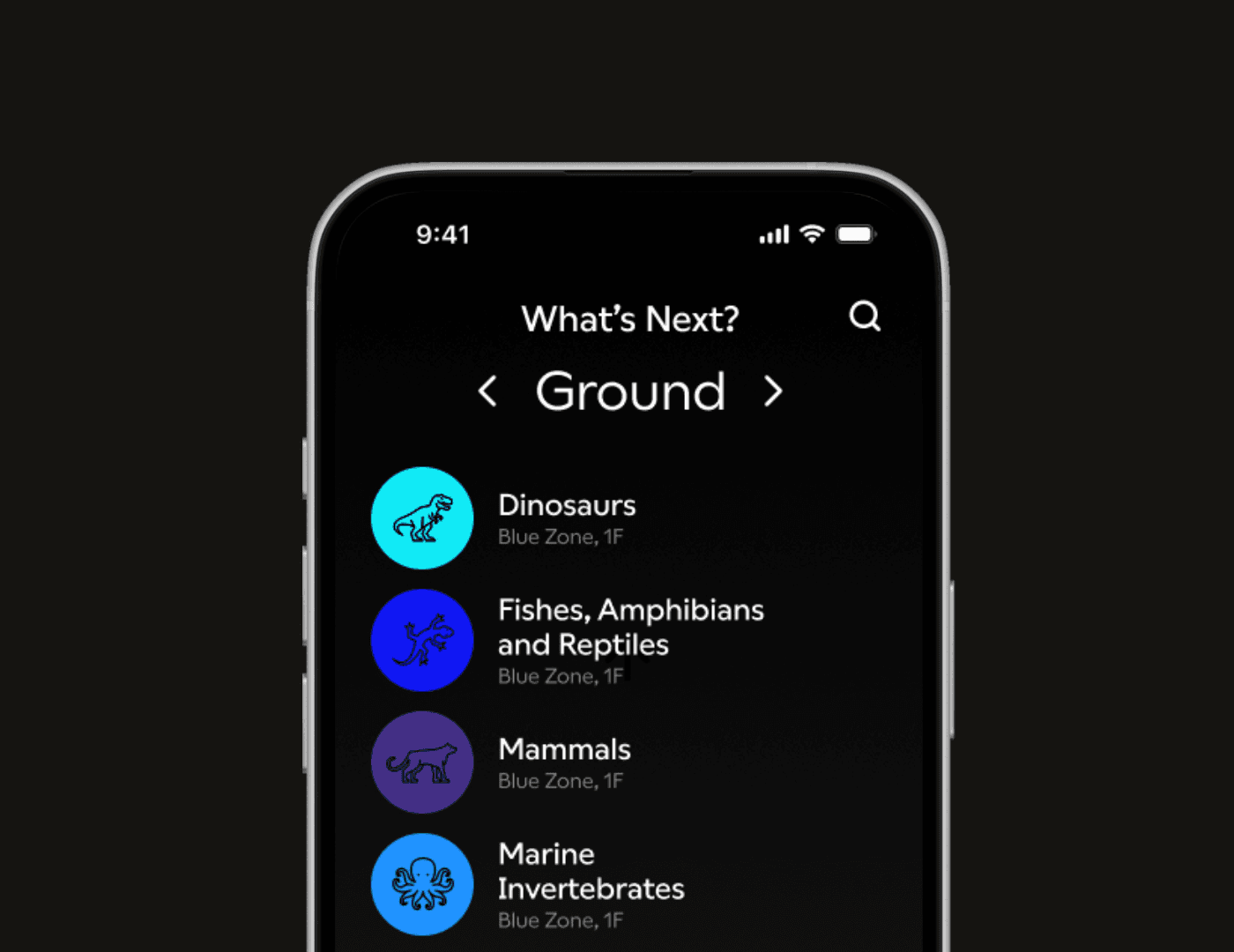
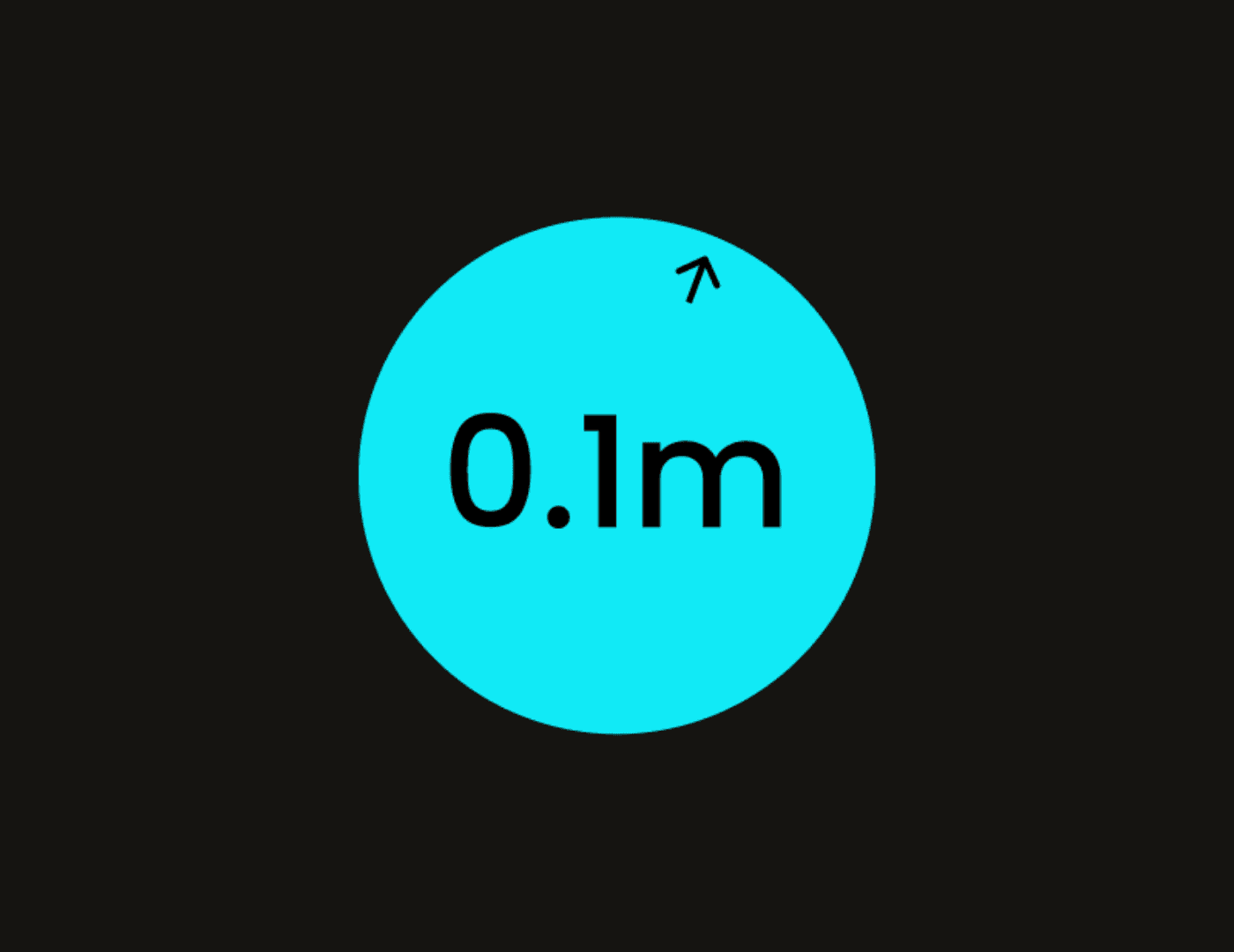
Designed a compass-based navigation that replaces text directions entirely. A single needle points toward the chosen exhibit, with distance shown as a number. Nothing to read, nothing to interpret. It works the same for a seven-year-old and a first-time international visitor.

The UI stays intentionally minimal: distance, direction, and destination. Nothing more. This came directly from what we observed: oversimplified maps and verbal directions were failing people not because they were unintelligent, but because the format assumed a shared language. The compass assumes nothing.
Exhibits that reward arriving
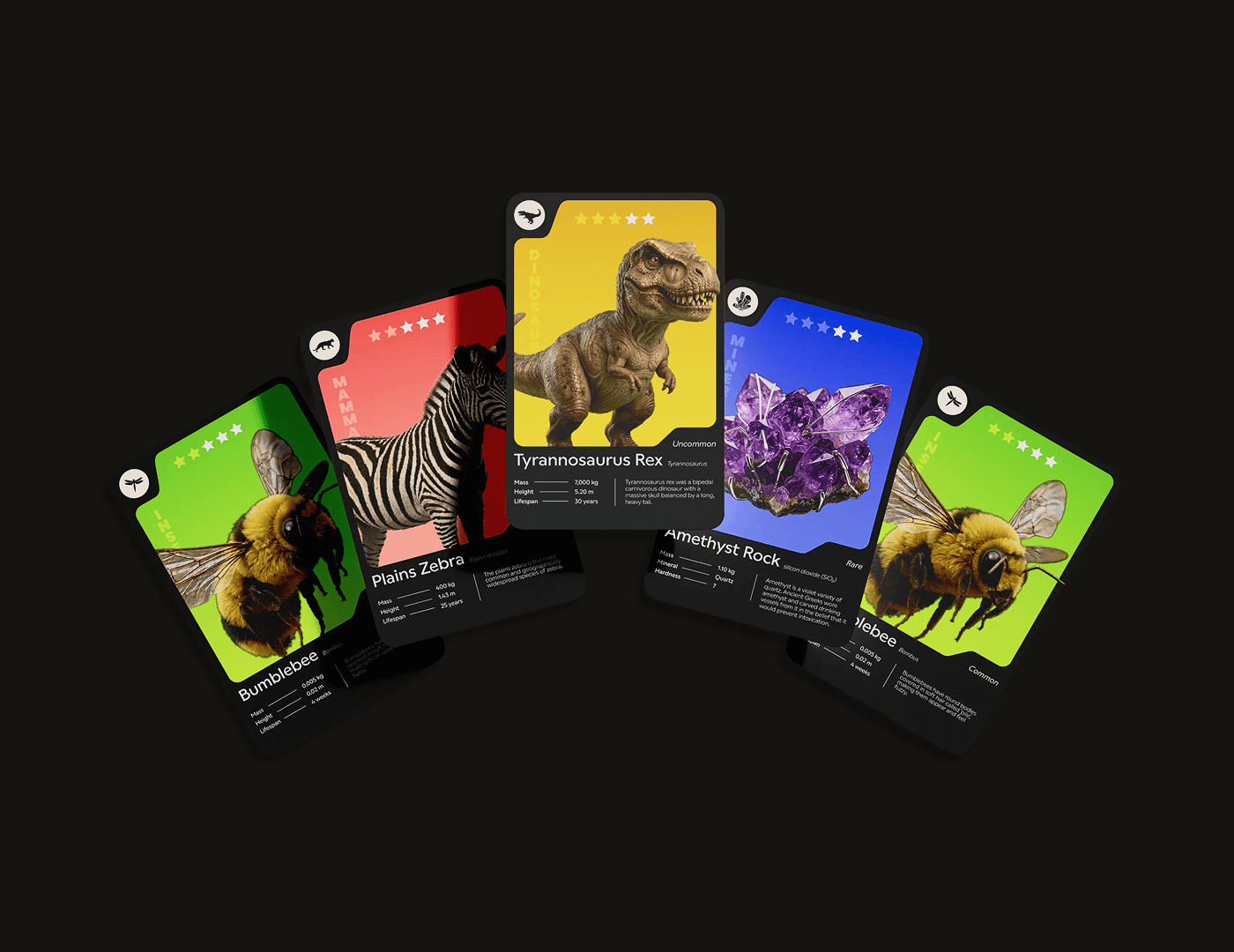
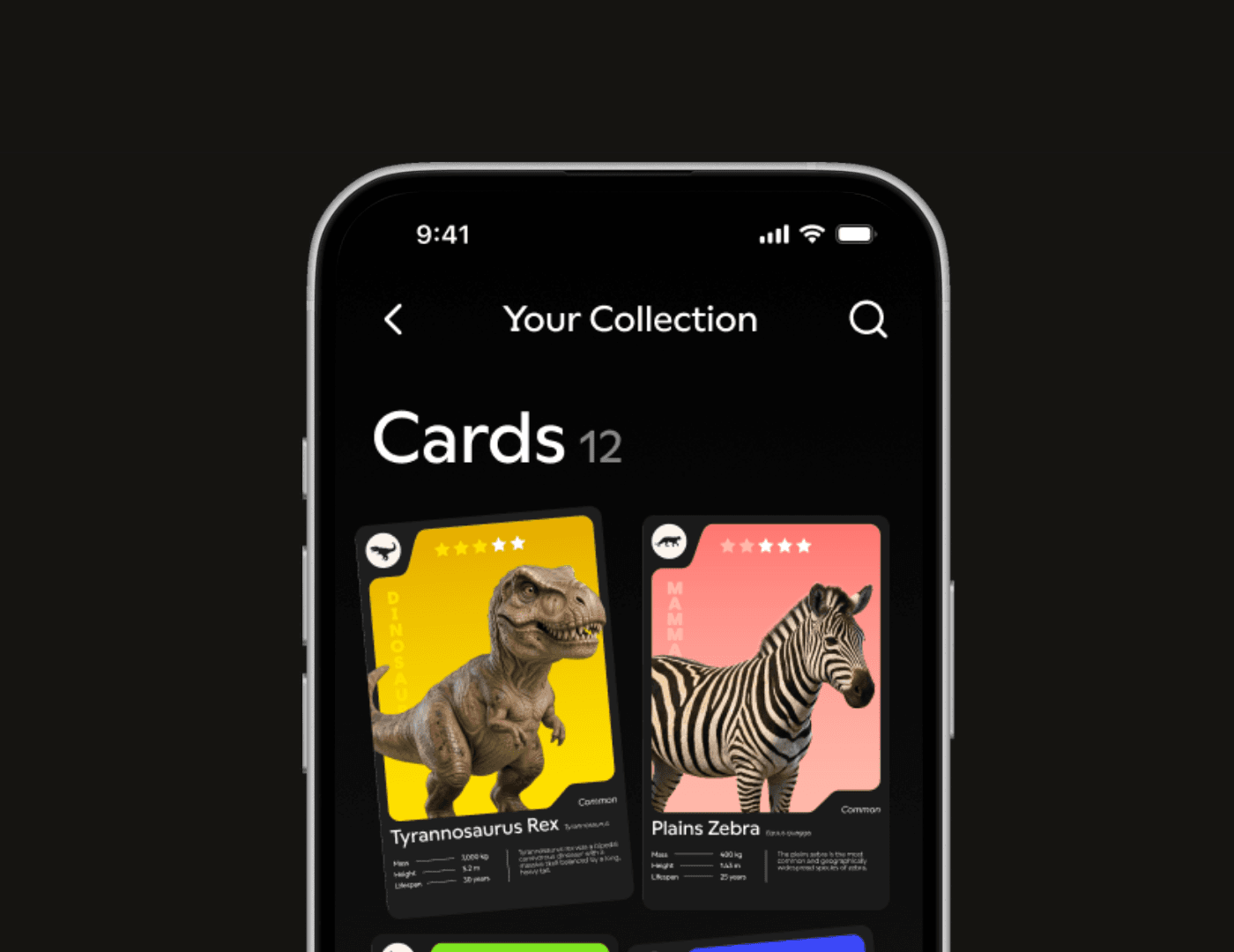
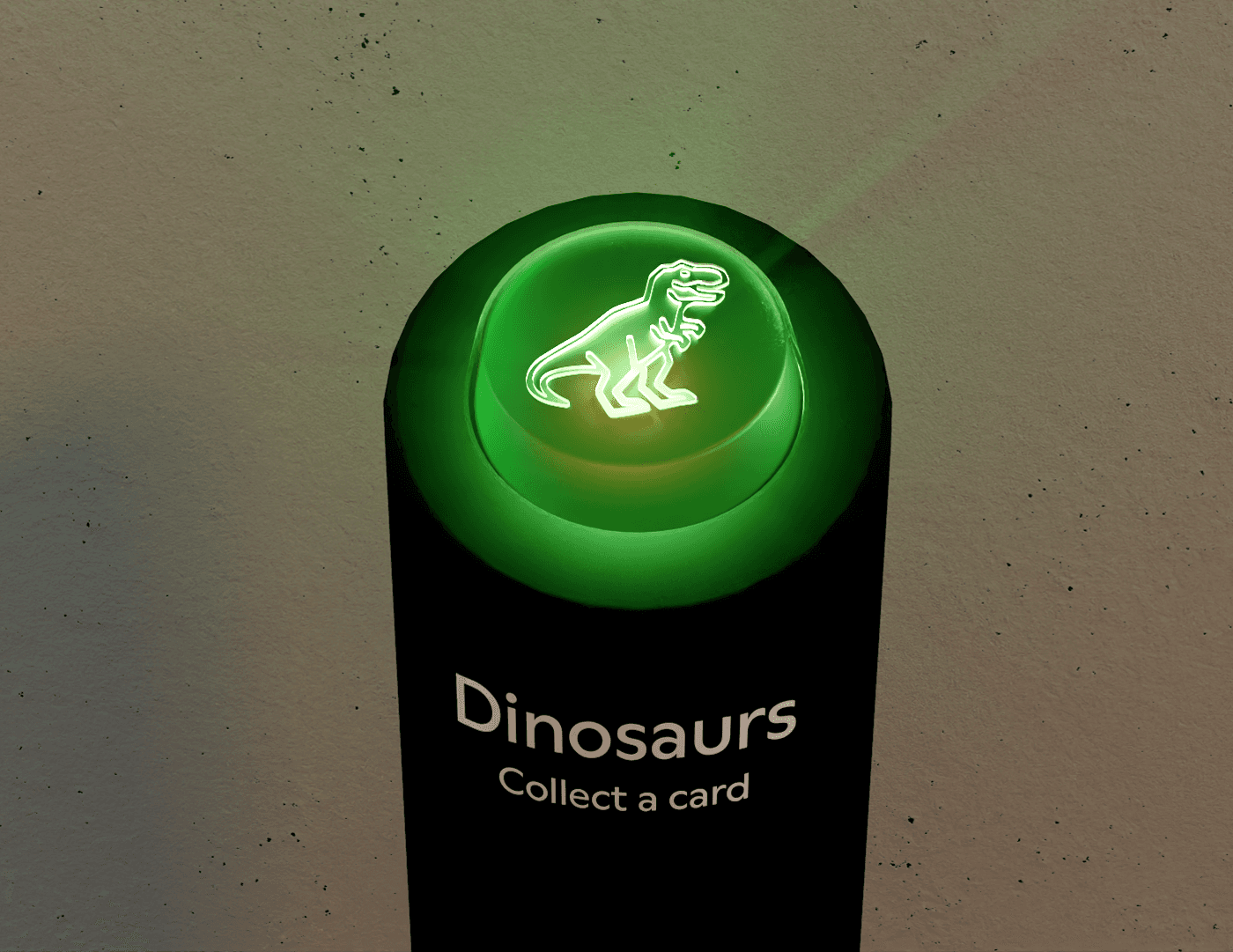
Once a visitor reaches an exhibit, they tap a physical totem to unlock a collectible digital card- a species, an artefact, something from the room they're standing in. You don't know exactly what you'll get, and that uncertainty is the hook and that moment of reveal carries a small but real emotional charge, the same one that makes kids tear open a pack on the way home from the shop.

Tying rewards to specific locations including under-visited wings, gives visitors a reason to stray from the crowd. Rare cards only come from rarely-visited rooms and exploration becomes the point.
A reason to stay longer
After collecting cards, visitors can navigate to a battleground in the cafeteria to challenge others. The winner takes the opponent's card. Stakes are introduced without instructions but visitors figure it out because the game makes it obvious.

This was designed with the disengaged students in mind. A school group with nothing to do becomes a group competing for cards across every floor of the museum and learning something new along the way. The social layer adds fun while also giving structure to an otherwise unguided visit.


Physical meets digital
The totems, custom-fabricated enclosures housing NFC tags and ESP32 boards, are the physical anchor of the experience. They weren't an afterthought, but were designed as part of the system. The tapping interaction was deliberately designed to mirror contactless payment, a gesture already ingrained in daily life, so there's no learning curve, no instructions needed. Positioning and height were considered for accessibility from the start, ensuring wheelchair users and young children could tap without assistance.
What's next?
The analytics layer opens up a compelling direction for development. With real-time visitor flow data, the museum could use NHM Explorer as an active crowd management tool- surfacing quieter exhibits at peak times, personalising compass routes based on dwell time, or building seasonal card collections tied to new exhibitions. The infrastructure for a genuinely adaptive museum experience is already there.
*The best museum experiences make you feel like a child again because they remind you what it felt like to discover something for the first time. That thrill of learning something new, the small awe of it, is worth designing for.